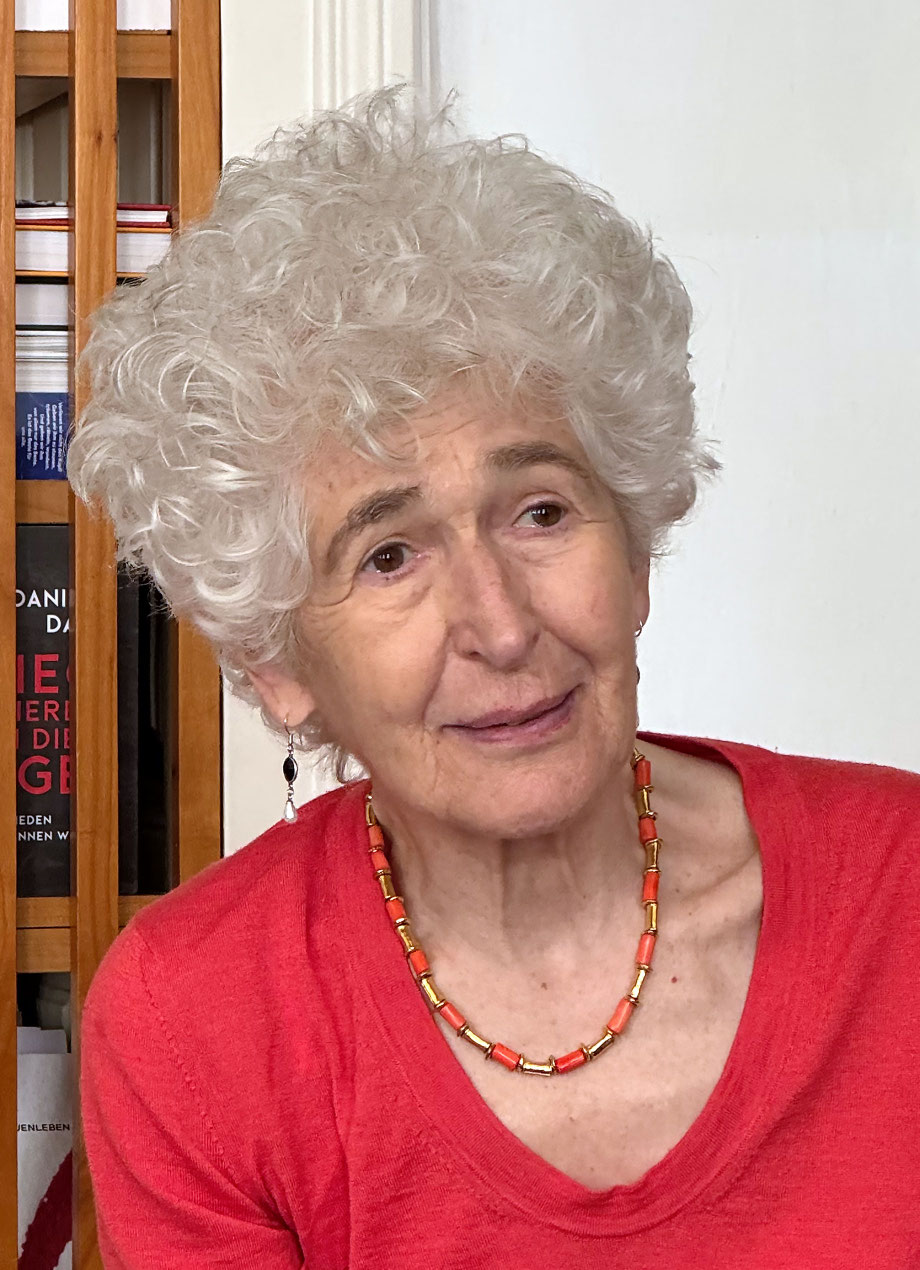
Daniela Hammer-Tugendhat 1946-2025
Farewell and celebration of a brilliant life
Vienna, Feuerhalle Simmering, Friday, October 10, 2025
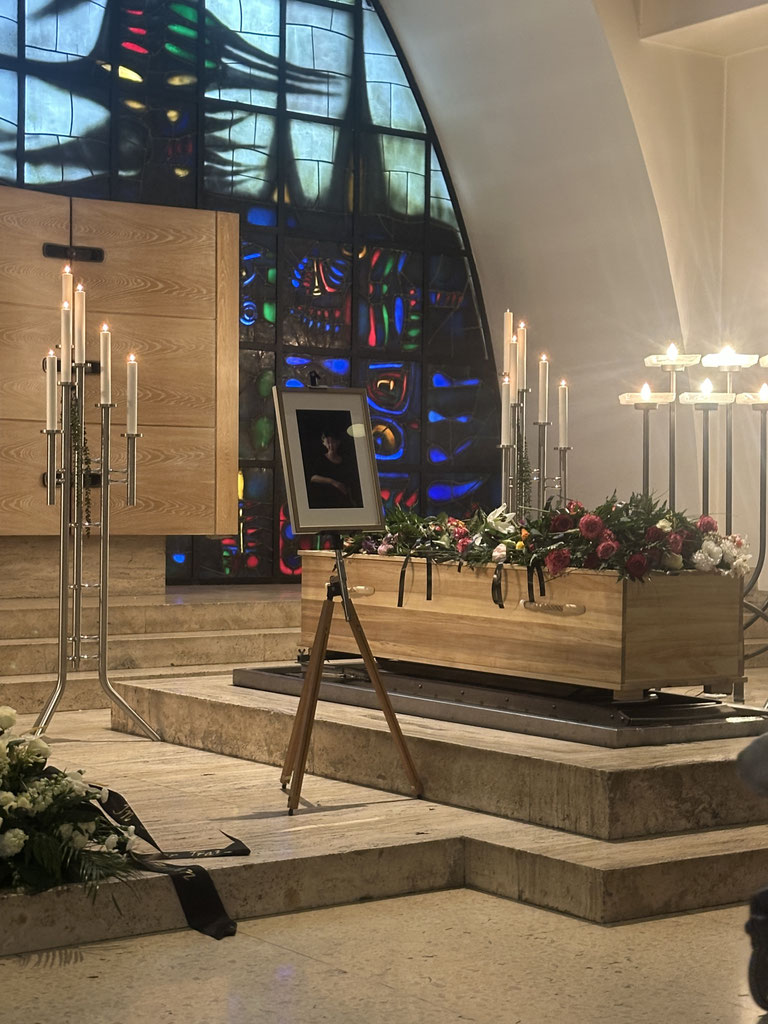
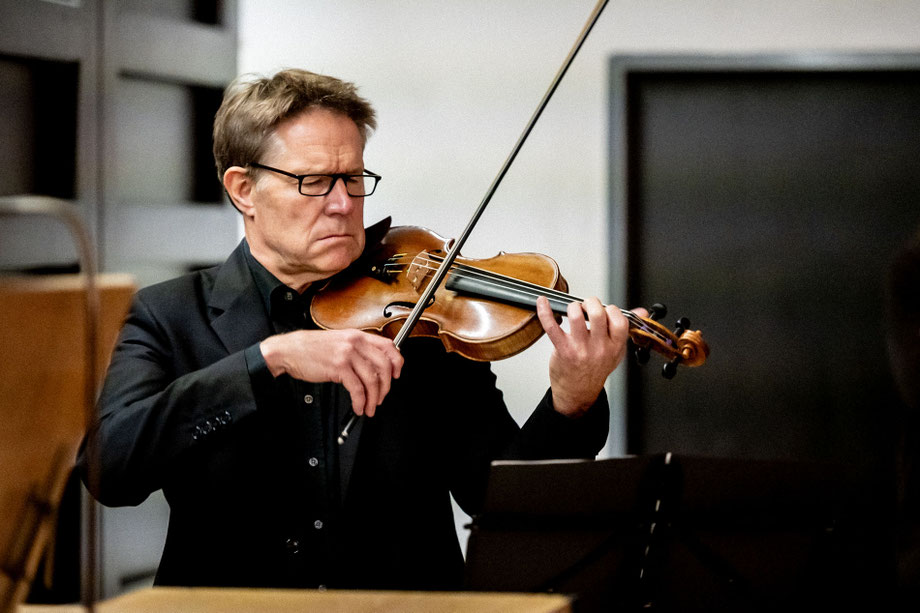
1. Johann Pachelbel: Canon in D for three Violins und Continuo. 4:23
2. Pietro Locatelli, Concerto Grosso in C-Minor, Op. 1/11– 3: Sarabande. 3:47
3. Arcangelo Corelli, Concerto Grosso in D, Op. 6/4 – 2. Adagio. 2:16
4. Henry Purcell, Chaconne in G Moll for strings. 6:28
aus:
Albinoni: Adagio – Pachelbel: Canon; Scotish Ensemble, Jonathan Rees, Virgo 1991
Design Kondolenzbuch: David Spiola and Lukas Hammer
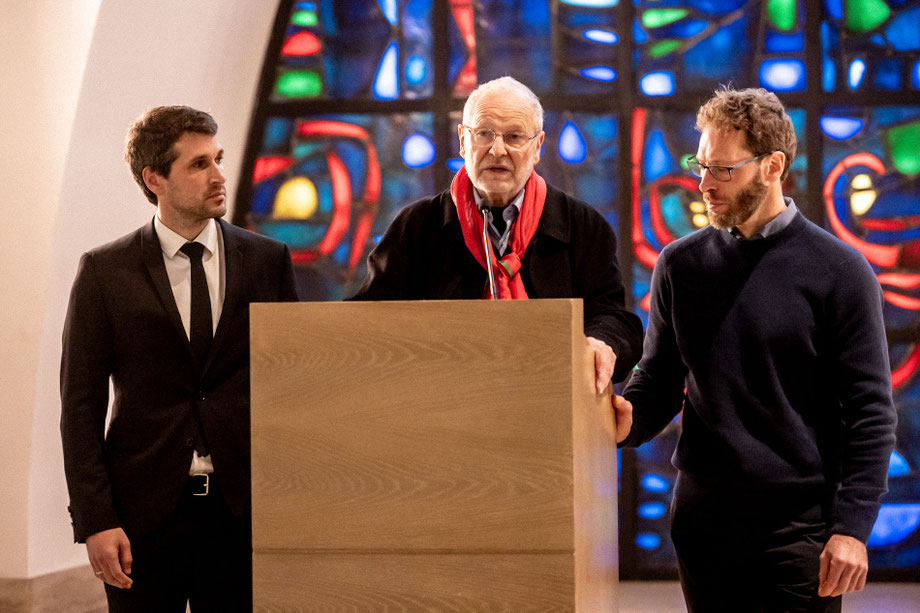
Liebe Freundinnen und Freunde,
Dear Friends,
Queridas amigas y queridos amigos,
On behalf of our family, I would like to warmly welcome you all.
And thank you for coming to this celebration.
I would also like to thank all the people who accompanied and cared for Daniela during her illness. A special thank you goes to Viktória Kovács for her care during her final days.
Our thanks also go to everyone who contributed to the organization of this celebration.
We don't just want to say goodbye to Daniela, but also celebrate Daniela's successful life.
I was fortunate to live with this wonderful woman for 55 years.
She lives on in our children and grandchildren.
She will be indelibly remembered as a person and in her works.
We can understand her life and her social practice as a call not to stand still in thought and action.
Ivo Hammer-Tugendhat
Johanna Schwanberg, Eulogy for Daniela (reciting the laudation from June 28, 2024, in accordance to Daniela's final wishes)
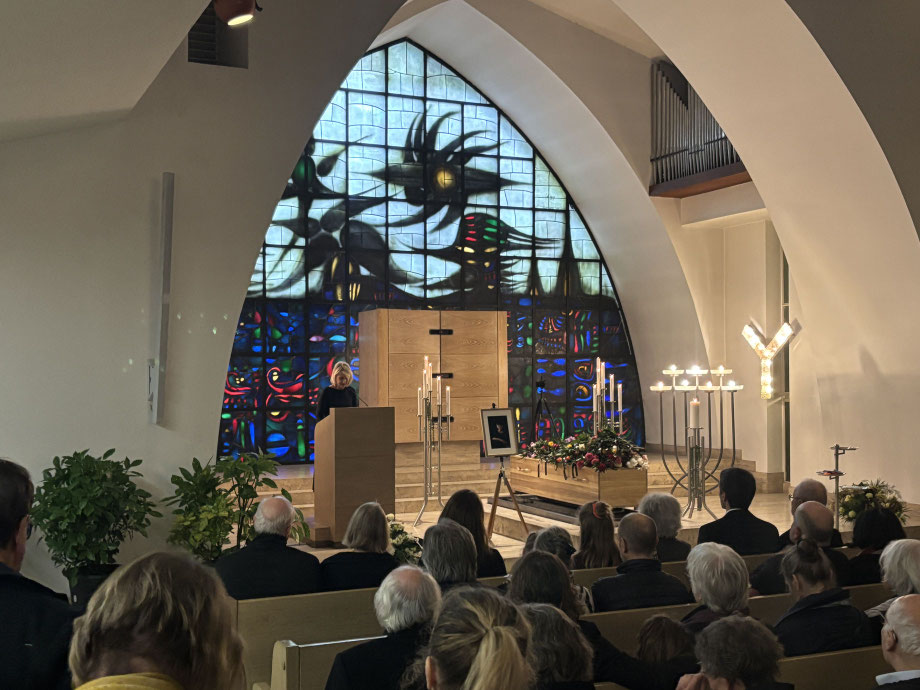
Dear Hammer-Tugendhat family, dear mourners!
Three days before your death, dear Daniela, you asked me to recite the laudatory speech for the award of the Golden Decoration of Honor at your funeral. I'm giving it today with minimal adaptations. It's not easy for me, because everyone here would have their own words – and some already know the speech. Above all, I painfully miss eye contact with your wise, alert eyes. At the same time, I grant your wish with the greatest joy and gratitude.
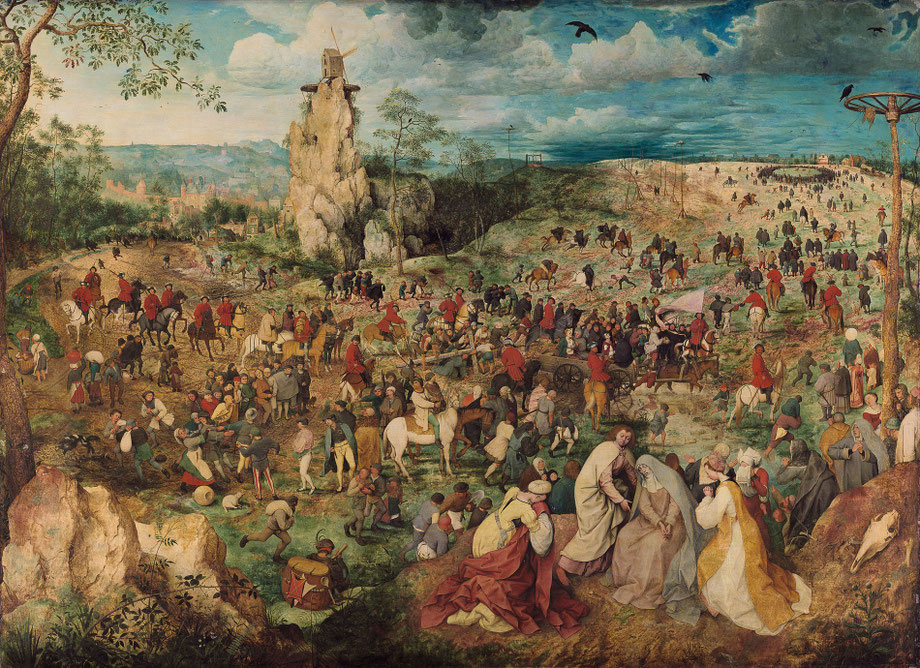
A harmonious color scheme of blue-green and ochre tones. In between, colorful, especially red, splashes of color. I make out a vast, hilly landscape. The picture is filled with the hustle and bustle of a folk festival. Only upon closer inspection do I discover the actual event, tiny in the center. It shows a man collapsed under a cross. People are paying no attention to the dramatic events; the murder of non-believers seems too omnipresent. Despite its sacred subject matter, this is a highly political painting, closely connected to the events of its time of creation, yet still seems exceptionally relevant today, given the many global military conflicts and the lack of acceptance of diversity and otherness..
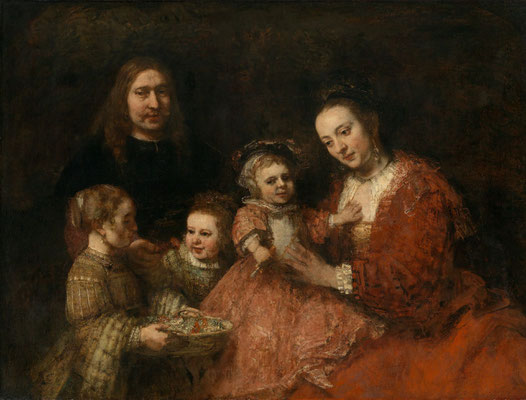
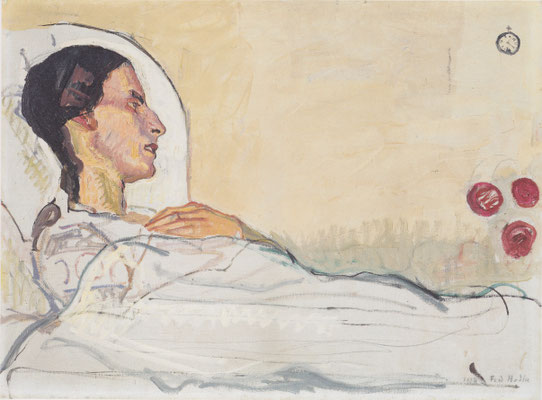
Reflecting on the significance of the scholar whose life we are celebrating today is impossible without immersing ourselves in the world of the paintings she deals with. Pieter Bruegel the Elder's "Carrying of the Cross," created in 1564, is closely connected to the research of Daniela Hammer-Tugendhat. And it was the first work of art I was privileged to see through Daniela's eyes as a student over 35 years ago. This radically changed and decisively shaped my view of art, art history, and indeed the world as a whole. Through analyzing this painting, I learned a great deal from Daniela Hammer-Tugendhat—like countless other young people. Much that goes far beyond art history. She taught me that the production and reception of art is among the most exciting and meaningful things life has to offer. Above all, I understood that art history is deeply connected to all areas of human existence. Through her image analyses, the world can be experienced in all its complexity, in all its beauty, in all its cruelty, in all its contradictions. Using works such as Cranach's "Lucretia," Titian's "Danae," Rembrandt's "Family Portrait," or Hodler's series of the dying Valentine Godé-Darel, Daniela Hammer-Tugendhat explores timeless yet extremely topical themes: She writes about sexuality, gender constructions, violence against women, family relationships, economic inequalities, power relations, life and death—and above all about media-related issues such as the relationship between text and image.
Daniela Hammer-Tugendhat's research is so important for society because, in her approach of "art history as cultural studies," she demonstrates that images play a decisive role in constituting reality, just as works of art can never be seen in isolation from the economic, social, political, gender, and linguistic realities of a society. Despite situating it within historical and sociopolitical contexts, she always allows art to be art. She approaches art and artists with the greatest possible appreciation and attentiveness. This is also reflected in the fact that her theses are preceded by detailed descriptions of the images. She consistently points out that visual art has qualities that are unparalleled. She demonstrates that art can put its finger on sore spots. That it can visualize things that are repressed or ignored by society. She writes: "Art can make the invisible visible. But it also has the ability to render things, people, concepts, or ideas invisible in certain contexts, to erase them from the field of representation and thus from our consciousness."
As this quote from her latest major work reflects, Daniela Hammer-Tugendhat formulates her thoughts in precise and modest language. She never places herself at the center of her research. The vanity that sometimes speaks from academic texts is entirely absent from her work. At the same time, she never hides behind apparent scientific objectivity, but always makes it clear that science is always about attitudes, values, people, and their respective specific perspectives on reality.
Daniela Hammer-Tugendhat is quite rightly celebrated as a pioneer of feminist art studies like a pop star. Her lectures on YouTube reach an enormously broad audience.
Its audience, inspiring people who are not normally interested in art history at all.
Today we celebrate and bid farewell to an icon of art history whose achievements – we are all convinced of this – deserve far greater recognition than ever before.
Daniela Hammer-Tugendhat, born in 1946 in Venezuela, where her Jewish family had fled the Nazis, came to Vienna from Switzerland in 1967 to study art history under Otto Pächt. And fortunately for this city, she remained active here until her death. For Daniela Hammer-Tugendhat has profoundly enriched the intellectual life of Vienna, indeed of Austria as a cultural land, as a sharp thinker, critical contemporary, and outstanding art historian. Through her research and publications—from her dissertation on "Hieronymus Bosch" to her habilitation "Studies on the History of Gender Relations in Art" to her 2009 major work "The Visible and the Invisible." But above all through her decades of teaching at the University of Applied Arts, later also at the University of Vienna and other renowned international universities. Her school has produced important scholars, most of whom are here today. Many artists have created works directly or indirectly influenced by Daniela Hammer-Tugendhat's teaching and research.
Enumerating her academic achievements is far from sufficient to characterize what makes Daniela Hammer-Tugendhat the outstanding personality she is so valued and admired for.
Daniela, all the honors and recognition you have received and will receive posthumously are more than I can express today. For you, your achievements as an innovative art historian, as a crystal-clear author, as a captivating speaker, as a passionate teacher, as a politically engaged and critical contemporary, as a loving wife, mother, and grandmother, and as an appreciative friend form an inseparable whole.
Courage and a clear, political stance are essential to you. We need this now, in the face of the increasing global shift to the right – more than ever. More than once, I have witnessed you take an unequivocal stand in delicate situations and fight tough battles in various professional contexts, even when they harmed you personally, because you always uncompromisingly stood up for what was important to you and what you considered necessary in life.
Art, in particular, has always been an example for you to cultivate tolerance for ambiguity. Something that seems particularly valuable, especially in times when polarizing black-and-white thinking has rapidly increased again in politics, society, and social media.
What was characteristic about you was your ability to engage in dialogue and the consistently open, critical conversation you sought with your counterparts. This also included your ability to accept criticism to a high degree. We've worked together extensively over the past few years, and I've witnessed how deeply you've engaged with everything you've dealt with; this applies to art, but also to the people you've collaborated with. I've never before experienced someone as legendary in their field as you being so open to criticism of their statements. Conversely, you challenged your counterparts to the highest degree, for example, by critically questioning your counterpart shortly before the opening of an exhibition, why I had chosen a particular work of art that didn't convince you. The greatness of your personality was also reflected in the fact that your initial skepticism could occasionally turn into enthusiasm when your counterpart's arguments seemed convincing enough to you.
Daniela, you have impressively demonstrated to everyone who has had contact with you, both privately and professionally, what it means to approach life with the greatest possible intensity and sincerity. Even if that means facing one's own finiteness with full awareness. In the interview for our catalog "Being Mortal," you formulated the striking sentence: "The worst thing is not to die, but not to have lived."
Daniela, you deserve all our admiration because you have always made decisions in life as well as in science. And because you made them according to criteria you defined yourself, not those imposed by a performance-oriented, neoliberal society.
You have also made wise decisions in your private life by showing us all how to be happy with one person, with your dear Ivo, for a lifetime. Especially in the last few months of your decline,
You told me several times, every time Ivo left the room, how much strength you get from Ivo, his affection, and his zest for life.
You were and are a role model for many women, because at a time when this was much more difficult than today, you showed us that it is possible to combine science and family by having your wonderful sons Lukas and Matthias and raising them lovingly together with Ivo. At the same time, you didn't sugarcoat the difficulty of balancing family and career, but instead let us, as young women, share in your struggle.
Despite all the passion with which you pursued your work, you were always a support to others, which included cultivating friendships with appreciation. It is a gift to have had you as a collaboration partner, as a teacher, as a friend—and, as I know from your family, as a wife, as a mother, as a mother-in-law, and as a doting grandmother. On behalf of all the mourners present here, I thank you for what you were and are for each and every one of you. I thank you for everything you have done for art history, cultural studies, the art scene, the city of Vienna, the country of Austria, and far beyond. Our grief today is endless—but at the same time, we are blessed to have been part of your life, your thoughts, and your work.
Verena Krieger, eulogy for Daniela

Eulogy for Daniela
We all know what we have lost in Daniela, how much we owe her, how richly she enriched us. I would like to recall some of her qualities that resonate particularly strongly within me and are important to me:
Her Voice
When I think of Daniela, I hear her voice. She had a distinctive voice: clear and emphatically articulate, with the extraordinary, characteristic combination of Swiss accent and Austrian idioms. When I read her writings, I hear her speaking. I believe this is because, with Daniela—and this is something special—there was a direct connection between her thinking, her speaking, and her writing; she wrote as she spoke, and she expressed directly what and how she thought. Therefore, her entire personality is always present in her writings, even in purely academic works.
Her Love of Beauty
Daniela was a beauty: her slender face, her wonderfully elegant nose, her curved, sensual mouth, her warm and clear eyes, her vibrant dark, later silver, hair, and her upright posture made her a strikingly beautiful and impressive woman. Her clothing was casually elegant; she loved wearing bright colors and exquisite jewelry. Daniela took pleasure in creating a beautiful world together with Ivo. For her, beauty was not something external, but a spiritual quality, a way of life. A beautifully designed everyday life was essential to Daniela's aesthetic sensibility—a fundamental component of her great love of art.
Her Attentive Gaze
There is a photograph of Daniela that Ivo took when the two of them were last together at an exhibition: the "Women Artists and Modernism" exhibition at the Belvedere. By then, she was already severely affected by her illness, sitting in a wheelchair, almost too weak to see. But the photograph shows her gazing at a work of art—and it's precisely the gaze I know so well from her, from the countless exhibitions we visited and discussed together: She would always look at a work for a very long time, attentively, and her gaze always conveyed both an analytical and an appreciative attitude. It was a gaze that sought to fully grasp the essence of art. And Daniela looked at people with the same attentiveness: curious and empathetic, critical, inquisitive, and approachable.
Her communicative intellect
Daniela was a sharp thinker who enjoyed both academic and political discourse. She looked beyond the confines of academia and considered social conditions. She argued with crystal clarity and critical insight, yet remained open to the arguments of others. In art history, Daniela was a maverick—in the sense that she didn't subscribe to any particular turn or trend, but steadfastly pursued her own cultural studies research approach, the potential for insight of which cannot be overestimated. At the same time, Daniela was always interested in a fruitful exchange. She maintained close contact with many colleagues and consistently emphasized how enriching this collaboration was for her. Over the years of our friendship, we read and discussed virtually all of our projects—books, essays, lectures, exhibitions—recitrated and discussed them together; this was an indescribable benefit and also a great pleasure. Daniela's communicative intellect also shaped her academic teaching, which was truly imbued with pedagogical passion. Whether with students, friends, or colleagues, Daniela possessed the precious gift of open dialogue, striving for shared understanding.
Her courage to swim against the current:
Daniela often took a courageous stance, in academic controversies as well as in political ones. She wasn't afraid to stand alone against the majority when she felt it was the right thing to do. Today she is celebrated as a pioneer of feminist art history, but this easily obscures the fact that she had to fight for this recognition as a woman, mother, and feminist in a patriarchal academic environment against massive resistance. She was also a combative figure in university politics: I need only mention her campaign against the university law. Even when she was very ill, she mustered the strength to advocate for the interests of the University of Applied Arts on its university council. And Daniela was always keenly aware and engaged in socio-political issues. Together with Ivo, she was active in the Chile solidarity movement, among other things. And in the last years of her life, she was deeply affected by the devastation of the wars in Ukraine and Gaza. She consciously rejected the prevailing tendency to uncritically take sides in the Middle East conflict - also in view of her own Jewish background.
Her capacity for love
Daniela was a great lover and a warm-hearted family person. Ivo was her lifelong great love. The two were exceptionally fortunate to be able to share almost everything that was important to them for over 50 years: their intense engagement with art as well as their engagement with political events, their love of hiking in the mountains as well as their enjoyment of culinary delights and conviviality. They shared both beautiful and difficult times. For many, many years, Ivo and Daniela fought for the Tugendhat House, selflessly and against unspeakable adversity; together they made a significant contribution to ensuring that this family treasure, stolen by the National Socialists, is now accessible to the public in its restored state as a UNESCO World Heritage Site. And finally, Ivo accompanied and cared for Daniela in an admirable way during her final years. I was particularly impressed that, despite everything, they managed to find beautiful and happy moments together until the very end. And among her most precious, heartwarming moments were those she shared with her dearly beloved family – with Matthias and Lukas, Auolla and Sandra, with Theo, Anouk, Suna, Naima, and Yara.
Her Gift for Friendship
Daniela was a serene and self-possessed person. She had no need to put herself in the spotlight or compete with others. On the contrary, she was open and approachable; those she valued were treated with great warmth. Together with Ivo, she cultivated wonderful hospitality, and she charmed her guests as the world's best cake baker. Throughout her life, Daniela continually forged new friendships – her warmth, it seemed, didn't diminish with each encounter, but rather grew. And those who enjoyed her friendship were truly fortunate. Because Daniela, as I experienced her, was a very good friend: someone with whom there were countless topics of conversation, someone who could offer constructive criticism, someone who was loving, empathetic, and supportive, reliable, and loyal.
In the end, all that remains for me is to express my personal feelings: I feel an immeasurable loss, bottomless sadness—but also deep gratitude that this special, beloved person, Daniela, was in my, in our lives.
Canon SHALOM, arrangement 1982 by Heinz Martin Lonquich (1937-2014). Richard Amon, director, and three singers of my choir (DAKOR): Armin Kleinlercher, Hans Schieber and Veit Macke
Jussuf Windischer, friend and political companion
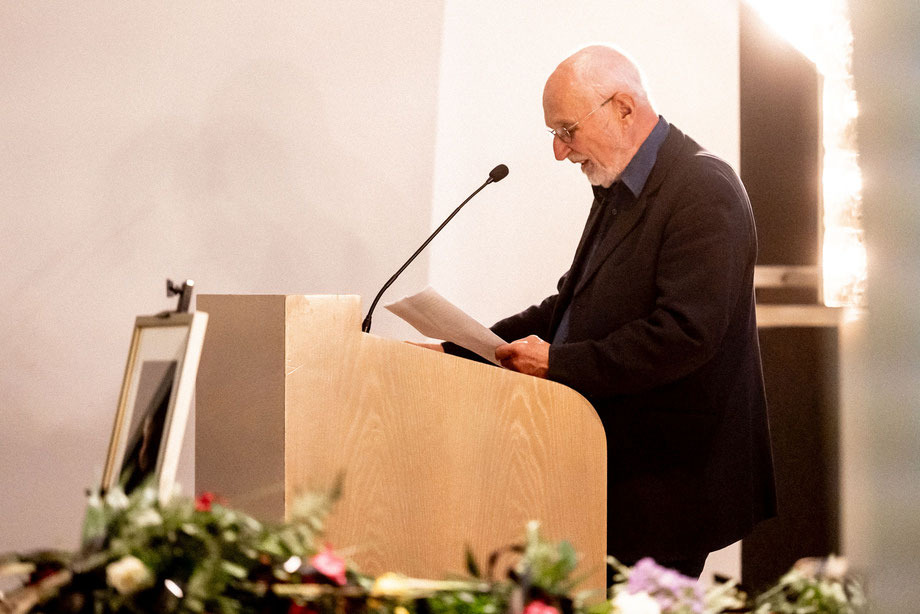
Dear Ivo, dear Matthias and family, dear Lukas and family, dear friends of Daniela, and above all, dear Daniela!
Dear Ivo, you invited me to say a few words, as a friend of the family, as a friend of Daniela – as a theologian of the Catholic tradition – that's me. You invited me to say a few words as a political companion of Daniela, of you, and of all of you – gladly, even if, in view of her death, silence is appropriate first and foremost.
Many years ago, at a conference of the Austrian-Cuban Society on a farm in Lower Austria – after numerous lectures and discussions – there was dancing. You loved to dance, I loved to dance. I had just returned from several years in Brazil; I talked about it, you talked about your childhood. We danced for a long time; dancing, too, showed us invisible dimensions of life.
Then: we, my wife and four children, cycled from Innsbruck along the Danube Cycle Path to the Volksstimmenfest (People's Voices Festival) at the Prater. We sought refuge at the so-called Paraguay stand. Brazil and Paraguay were in the final stages of a terrible fascist military dictatorship – we were fully aware of how much suffering, how many human rights violations, how much torture the oppressed peoples were enduring. That's where we met: in the Village of Solidarity, where people who knew, felt, and suffered met. In the tradition of liberation movements, including liberation theology, I was there; we were in the right place.
You understood me when you asked me, as an atheist, "How can you believe in God?" In many conversations and hikes, you helped me purify my image of God. "You shall not make for yourself an image of God"... yes, pretty much all images are false. As a theologian, I am also grateful that there are atheists – so that I can at least sense the infinite counterpart, the Alpha and Omega, a little better and more purified.
What does church mean to you? The church is "the people of God struggling for liberation." We looked at each other. "Are you praying too?" You looked at me questioningly. Yes, I pray, "Your kingdom come." This is what a traditional original prayer of Jesus says, namely a kingdom of justice, a kingdom of peace, a kingdom in which creation is respected. A healing, wonderful friendship; we were able to strengthen each other in our commitment to and with humanism – despite moments of despair. You helped me, you helped us, and many others not to give up.
Years ago, during our mission as peace observers in Israel/Palestine (in the West Bank in Tulkarem, my wife in South Hebron Hills in the Firing Zone), we always found a sympathetic ear in you. Just being able to talk at your home, at the round table, finding a sympathetic ear, that was and is solidarity. Although your family knew about and suffered the crimes and horrors of the Hitler regime, you had no understanding of the disregard and violation of human rights and international law. What's more, you were and are a humanist in the deepest sense. One sentence remains in my ears: "Why should it be permissible to kill in war? I don't understand that, I don't want to understand that.
A few months before her death, Daniela was still in Innsbruck for a lecture. The lecture hall was overcrowded. Right at the back, full of anticipation, as a layperson in art, but interested – full of vitality, you discussed the visible and traces of the invisible. What vitality! We were allowed to host you and talk for a long time. Afterwards, although already weakened, you made it. We went to the so-called Waldhüttl (the Vincentian Community is my current place of work), we went to the margins of society, where 30 poverty migrants, Roma and Romnia from Slovakia, are housed in an emergency shelter, where there are gardens, where there are sheep, donkeys, and poultry. A beautiful place... where there is much crying, but also much dancing. There is also an important memorial site of the resistance in Innsbruck. The resistance was organized there, coordinated by Heinz Mayer: Jew and Communist.
One of your students, Maria, and her family live there as a house manager – on the outskirts of the city, among and with people who were marginalized: beggars, musicians, newspaper vendors... you were interested in the fate of the people. You were present, you are present.
Still in my mind's eye: the Pieta with the dead son. Your reflections on it, the shared questioning of many biblical, religious images... even at my sickbed, we talked about the meaning of suffering; we had no answer; we looked at a picture of a person carrying a cross... in the midst of the people.
You said and wrote: death and a meaningful life are connected, in the presence of fellow human beings, in our presence—perhaps, in an eternal presence—filled with gratitude.
Rest in peace.
Eduardo Tugendhat, The Treasure of Memory
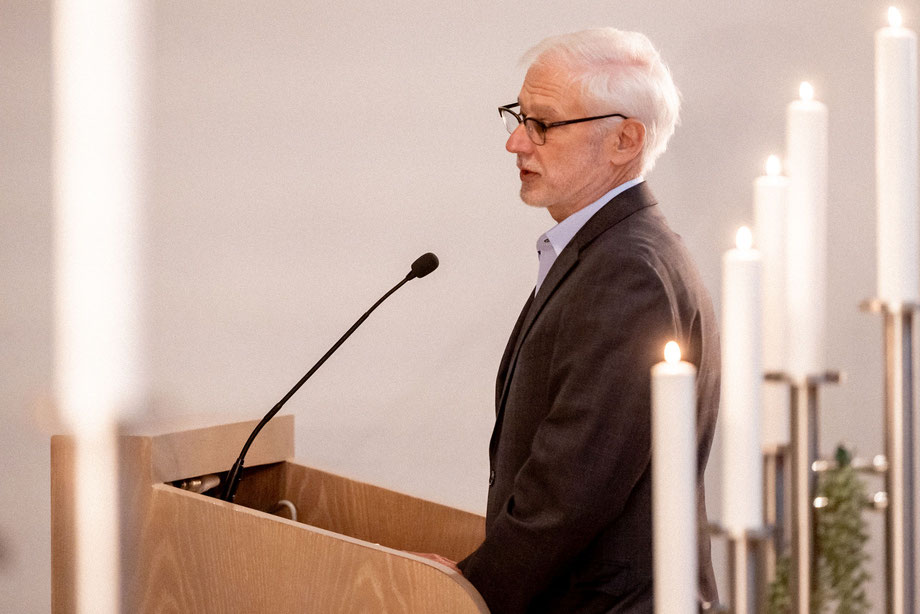
The Treasure of Memory
It is a special honor to be asked to make a few comments on behalf of a family. My name is Eduardo Tugendhat and I am Daniela’s nephew. I was asked by Ivo to speak on the Treasure of Memory which I will do but from a very personal perspective.
Not sure how many of you know that Daniela was born in Venezuela, as I was. Her parents and grandmother had fled the Nazis from Czechia with 2 little boys. How they ended up in Venezuela is not completely clear to me, but suffice it to say that like many refugees today, there were not many options available to fleeing Jews.
After the war, they returned to Europe—to Switzerland since they could not return to Czechoslovakia. Dani and sister Ruth both remember how difficult the transition was for them in school because they looked different and had a hard time with the Swiss German. My father was the only one to stay in Venezuela. He had been sent off to a high school in Boston where he met my American mother and they chose to live in Venezuela.
In an era with no Internet and limited communications, we grew up in a very different world from the rest of the family and could easily have lost contact. But a few family trips helped change that—a summer in St Gallen while my parents travelled in Europe, a trip to Venezuela by Dani and her mother and a family reunion in Brittany. These are the first memories of the family. Dani was my teenage aunt, 8 years older than me—but somehow we established a special connection during hours of badminton and traveling around, often laughing hysterically about the smallest things. I also remember not quite understanding how she and her mother could spend what seemed like hours discussing the art in each church that we visited.
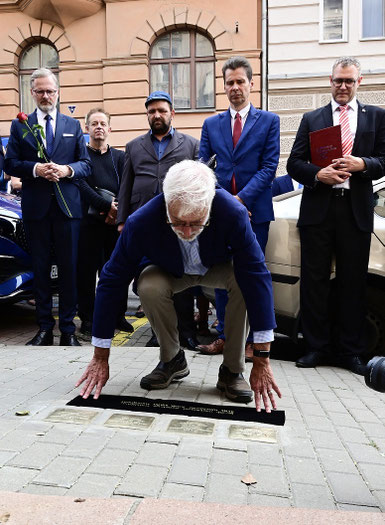
When my father died tragically, very young from suicide after struggling with alcoholism and depression, I realized how little I knew about him or the family he came from. It seems that for him memories were painful. But I wanted to understand; but also wanted to belong. I was lucky enough that my work took me to eastern European and middle eastern countries which allowed me to stop off in Zurich to see Ruth and her family and in Vienna to see Dani and her growing family. Whenever I stopped by, even for just a day or two, it was amazing how it seemed like we had been in regular contact. We arranged an amazing vacation together in Venezuela. Then I got involved in early attempts to do something about the Vila Tugendhat in Brno and all of the dramas associated with the restoration process. She helped orchestrate a major family reunion in Brno where relatives, many of whom I never knew existed came from around the globe. Last fall, we all joined in an emotional “stumbling stones” ceremony in Brno where we paid respect to the enormous impact that the “winds of history” had on us as a family and individuals. This summer we had a last get together. For me, Daniela’s memory lives on in my continued wonderful connections with Ivo, Matthias and Lukas and their families and of course my Swiss family as well.
I tell this story, because by definition memory involves looking back. But I think the treasure of these particular memories is that by trying to better understand who we are and where we come from, whether painful or joyful, opens the door for a special emotional connection and hopefully the opportunity to benefit from what we learn.
Last fall I brought my daughter Sara to the stumbling stones ceremony and this year she is here again. She also wants to understand, to feel connected. I am so delighted that she has made a special connection with Lukas’s daughter Anouk despite having their challenges with language and geographic distance. Passing on the memory of shared experiences and emotions, and the feelings of connection, is being passed on to the next generation.

Farewell music: Buena Vista Social Club, Ibrahim Ferrer, CHAN CHAN (1997)
|
De Alto Cedro voy para Marcané |
|
El cariño que te tengo
No te lo puedo negar
|
|
Cuando Juanica y Chan Chan
|
|
Limpia el camino de pajas
|
|
De alto Cedro voy para Marcané |
From Alto Cedro I go to Marcané
I arrive in Cueto, I'm going to Mayarí
The affection I have for you
I can't deny it
I'm drooling
I can't help it
When Juanica and Chan Chan
Sifted sand in the sea
How the sieve shook
Chan Chan felt pain
Clear the path of stubble
Because I want to sit
On that log I see
And this way I can't get there
From Alto Cedro I go to Marcané
I arrive in Cueto, I'm going to Mayarí
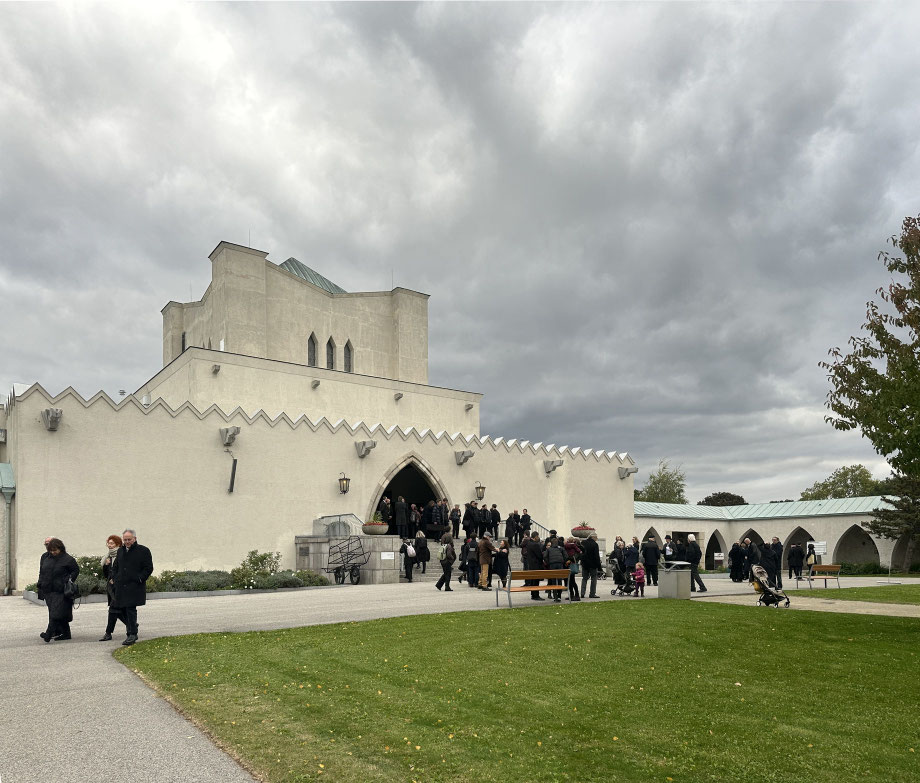
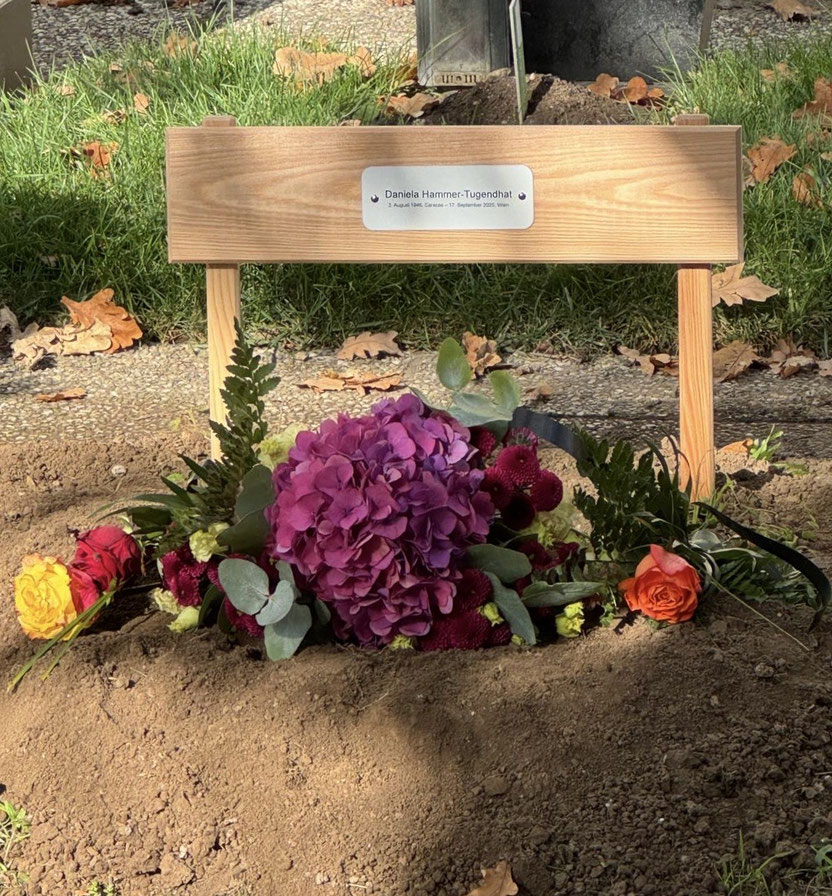
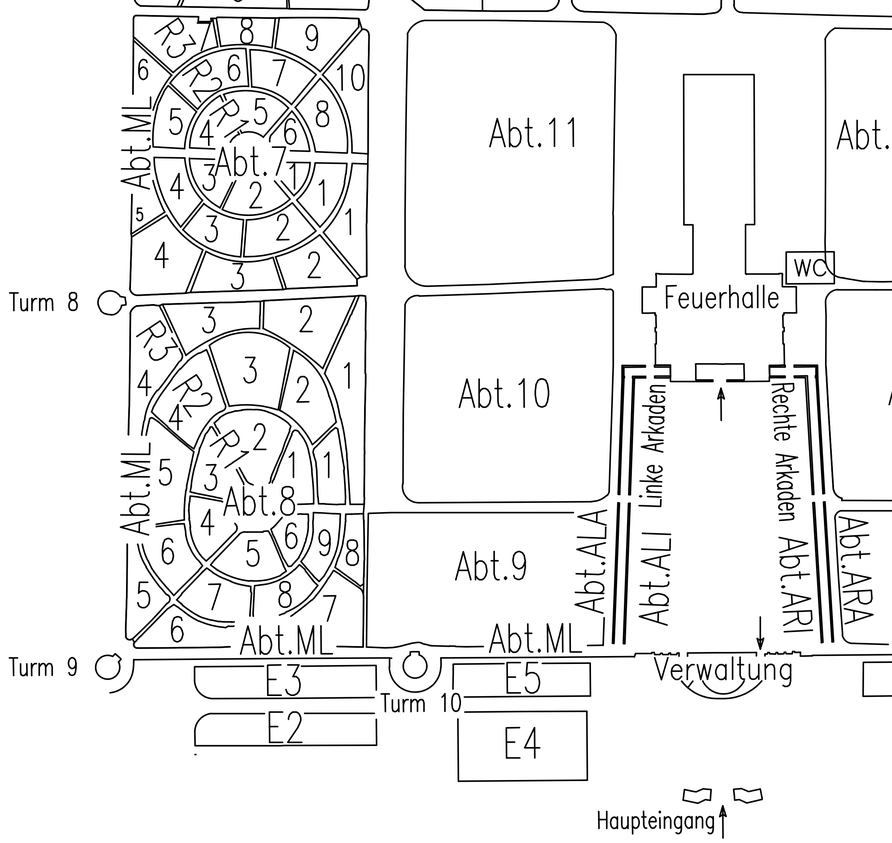
Location of the urn grave of Daniela Hammer-Tugendhat
The urn grave of Daniela Hammer-Tugendhat is located in the urn grove of the Feuerhalle Simmering, Simmeringer Hauptstraße 337, 1110 Vienna, west of the administration building, outside the wall of the Neugebäude (1568-1575), sector E 3, no. 143, under a Japanese cherry tree.
Daniela Hammer-Tugendhat
August 2, 1946 – September 17, 2015
We celebrate the life of
Daniela Hammer-Tugendhat
August 2, 1946 – September 17, 2025
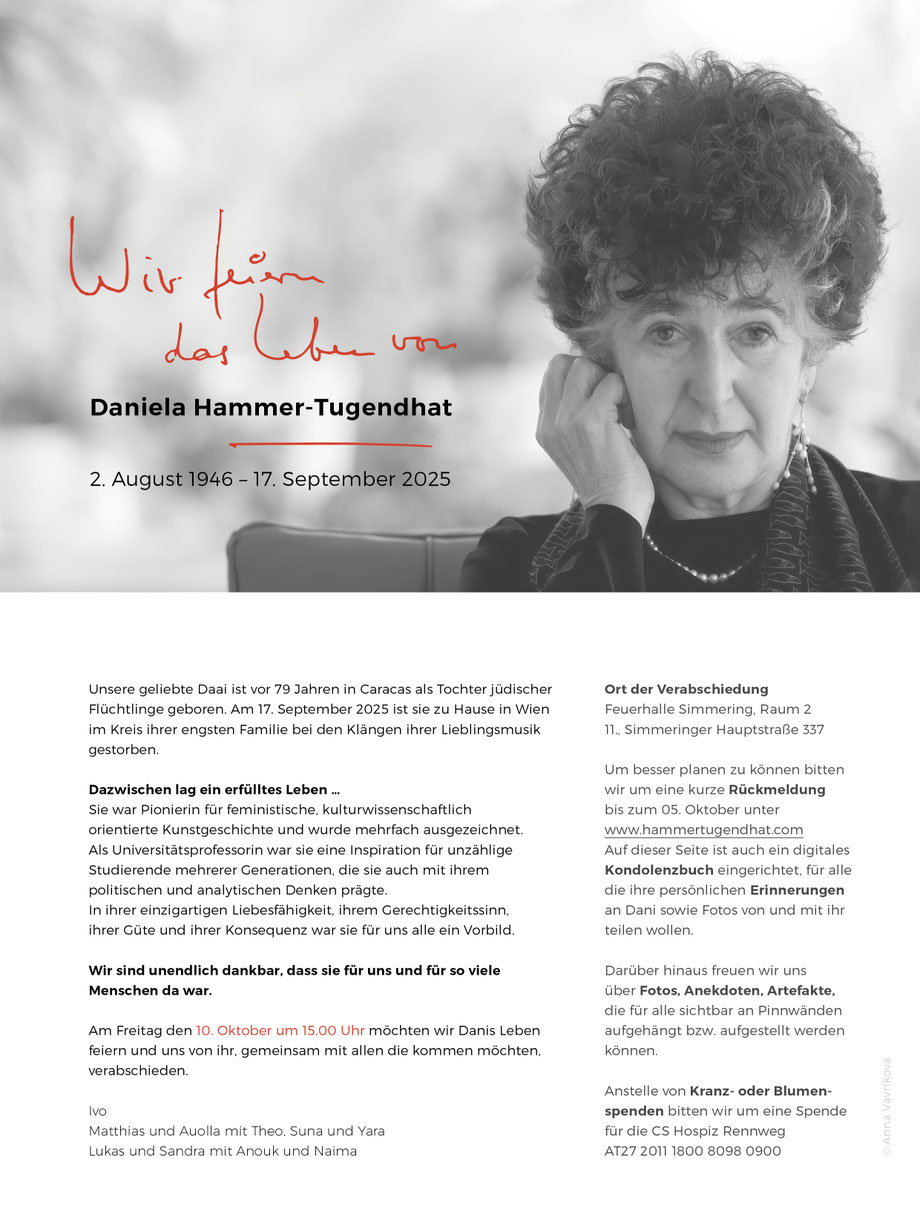
Our beloved DAAI was born 79 years ago in Caracas to Jewish refugees. On September 17, 2025, she died at home in Vienna surrounded by her closest family and her favorite music.
In between lay a fulfilling life...
She was a pioneer of feminist, cultural studies-oriented art history (art as representation) and received numerous awards.
As a university professor, she was an inspiration to countless students of several generations, whom she also influenced with her political and analytical thinking.
With her unique capacity for love, her sense of justice, her kindness, and her consistency, she was a role model for us all.
We are endlessly grateful that she was there for us and for so many people.
On Friday, October 10th, at 3:00 PM, we would like to celebrate Dani's life
and say goodbye to her, together with everyone who wishes to attend.
IVO
MATTHIAS AND AUOLLA WITH THEO, SUNA AND YARA
LUKAS AND SANDRA WITH ANOUK AND NAIMA
Place of farewell
Simmering Crematorium, Room 2, 1110 Wien, Simmeringer Hauptstraße 337
To help us plan better, we ask for a brief response by October 5th at www.hammertugendhat.com
A digital condolence book has also been set up on this page for all who would like to share their personal memories of Dani as well as photos of her and with her.
We would also be happy to receive photos, anecdotes, and artifacts, which can be posted or displayed on bulletin boards for everyone to see.
In lieu of wreaths or flowers, we request a donation to the CS Hospice Rennweg
AT27 2011 1800 8098 0900
Design of the death announcement: Angie Rattay, https://erdgespraeche.net
June 28, 2024
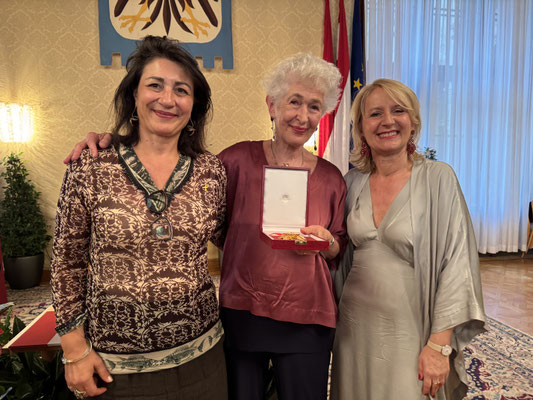
Golden Decoration of Honour of the State of Vienna for Daniela Hammer-Tugendhat
(from the press release www.ots.at dated 29 June 2024, Anne Kathrin Feßler)
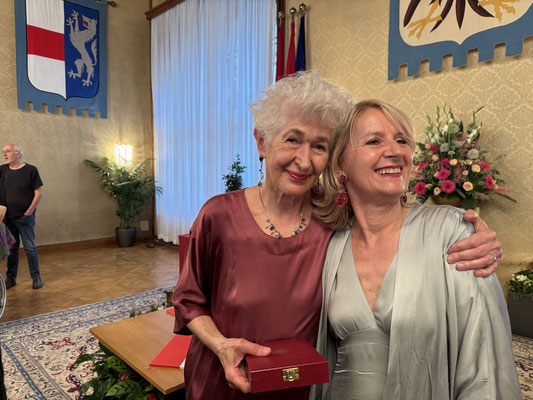
On June 28, 2024, City Councilor for Culture Veronica Kaup-Hasler, on behalf of Mayor Michael Ludwig, awarded the art historian Daniela Hammer-Tugendhat the Golden Decoration of Honor for Services to the State of Vienna in the Coat of Arms Hall of Vienna City Hall.
The ceremony was musically accompanied by the Art4Strings string quartet, which performed pop classics such as Neil Diamond's "I'm a Believer" and "Reach" by S Club 7.
In her thanks to the pioneer of gender studies in the discipline of art history, City Councilor for Culture Veronica Kaup-Hasler emphasized that in researching the male-dominated construction of images, Daniela Hammer-Tugendhat had "worked on a reorganization, indeed on a new way of seeing, and ensured that this consistently critical, consistently differentiated, and feminist perspective is reflected in the next generation." Kaup-Hasler thanked the scholar for her commitment, "clearly opposing a simplistic dichotomous thinking, hasty attributions, and a lack of listening. Because this has become so dominant in our time that it is a threat to democracy and endangers our coexistence. The ability to think in a differentiated way is sharpened by people like Daniela Hammer-Tugendhat."

Johanna Schwanberg: Laudation for Daniela Hammer-Tugendhat on the occasion of the award of the Golden Decoration of Honour for Services to the State of Vienna

Dear City Councilor for Culture, dear Daniela Hammer-Tugendhat, dear family and friends of those being honored today, dear guests!
A harmonious color scheme of blue-green and ochre tones. In between, colorful, primarily red, splashes of color. I recognize a vast, hilly landscape. The image depicts a folk festival-like hustle and bustle. Only upon closer inspection do I discover the actual event, tiny in the center. It shows a man collapsed under a cross. People are paying no attention to the dramatic events; the murder of non-believers seems too omnipresent, as numerous gallows wheels in the image illustrate. Despite its sacred subject matter, this is a highly political image, closely related to the events of its time of creation, but still seems extremely relevant today. Especially when I consider the violence and armed conflicts currently taking place around the world in connection with polarizing black-and-white thinking and the non-acceptance of diversity and otherness.
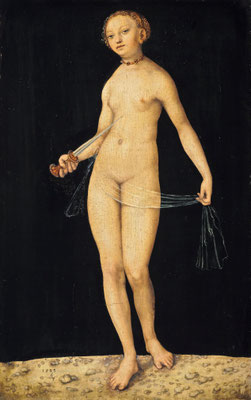
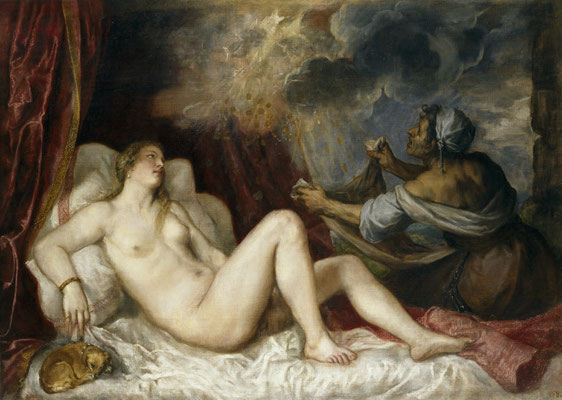
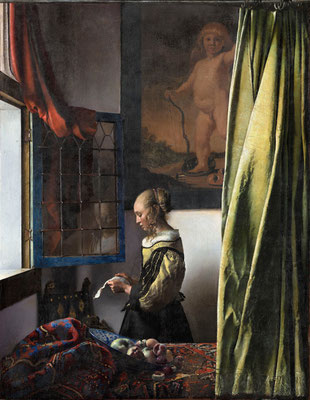
Contemplating the significance of the scholar being honored today is impossible without immersing myself in the world of the paintings she deals with. I didn't choose this 1564 work from the Kunsthistorisches Museum by chance. It was painted by an artist closely associated with Daniela Hammer-Tugendhat's research: Pieter Bruegel the Elder. Bruegel's "Carrying the Cross" is also the first work of art I was privileged to see through the eyes of the scholar being honored today as a student over 35 years ago. This radically changed and decisively shaped my perspective on art, on art history, and indeed on the world as a whole. And I certainly wouldn't be standing here today had I not met this extraordinary scholar. Through analyzing this Bruegel painting, I learned a great deal from Daniela Hammer-Tugendhat. Much that goes far beyond art history. Countless other young people have experienced the same thing as me. Daniela Hammer-Tugendhat taught me that the production and reception of art is among the most exciting and meaningful things life has to offer. Above all, I understood that art history is deeply connected to all areas of human existence. Through its image analyses, the world becomes tangible in all its complexity, in all its beauty, in all its cruelty, in all its contradictions. Using Cranach's "Lucretia," Titian's "Danae," Tintoretto's "Susanna and the Elders," Rembrandt's "Family Portrait," Segantini's "Wicked Mothers," Bruegel's "The Big Fish Eat the Little Ones," Hodler's series of dying Valentine Godé-Darel, and Vermeer's portraits of women, Daniela Hammer-Tugendhat explores timeless yet highly topical themes: She writes about sexuality, gender constructions, violence against women, family relationships, economic inequalities, power relations, life and death—and above all, media-related issues such as the relationship between image and visible reality, between the visual and the verbal.
Daniela Hammer-Tugendhat's research is so important for society because, in her approach of "art history as cultural studies," she demonstrates that images play a decisive role in constituting reality, just as works of art can never be seen in isolation from the economic, social, political, gender-specific, and linguistic realities of a society. Despite situating it within historical and sociopolitical contexts, she always allows art to be art. She approaches art and artists with the greatest possible appreciation and attentiveness. This is also reflected in the fact that her theses are preceded by detailed descriptions of the images. She consistently points out that visual art has qualities that are unparalleled. In her research, she demonstrates that art can put its finger on sore spots. That it can visualize things that are repressed or hidden by society. She writes: "Art can make the invisible visible. But it also has the ability to make things, people, concepts, or ideas invisible in certain contexts, to erase them from the field of representation and thus from our consciousness." As this quote from her last major work reflects, Daniela Hammer-Tugendhat formulates her thoughts in precise and modest language. She never places herself at the center of her research. The vanity that sometimes speaks from academic texts is completely absent from her work. At the same time, she never hides behind apparent scientific objectivity, but always makes it clear that science is always about attitudes, values, people, and their respective specific perspectives on reality.
Daniela Hammer-Tugendhat is quite rightly celebrated by both scholars and artists as a pioneer of feminist art studies, like a pop star. Her YouTube lectures reach an enormously broad audience, inspiring people who are not normally interested in art history.
Vienna is honoring an icon of art history today, and I can't imagine anyone more deserving of this Golden Decoration of Honor than her. Daniela Hammer-Tugendhat, born in 1946 in Venezuela, where her Jewish family had fled the Nazis, came to Vienna from Switzerland in 1968 to study art history under Otto Pächt. And fortunately for this city, she lives and works here to this day. Daniela Hammer-Tugendhat has profoundly enriched the intellectual life of Vienna, and indeed of Austria as a cultural country, as a sharp thinker, critical contemporary, and outstanding art historian. With her research and publications—from her dissertation on "Hieronymus Bosch" and her habilitation "Studies on the History of Gender Relations in Art" to her magnum opus "The Visible and the Invisible," published in 2009. Also through numerous symposia and lectures, but above all through decades of teaching at the University of Applied Arts Vienna, later also at the University of Vienna and other renowned international universities. Her school produced important scholars, some of whom are still here today. Many artists have created works directly or indirectly influenced by Daniela Hammer-Tugendhat's teaching and research. Enumerating her academic achievements is far from sufficient to characterize what makes Daniela Hammer-Tugendhat the outstanding personality for which she is valued and admired by so many.
Daniela, this decoration of honor is more deserved by you than I can even begin to put into words today. Because for you, your achievements as an innovative art historian, as a crystal-clear author, as a captivating speaker, as a passionate teacher, as a consistently politically engaged and critical contemporary, as a loving wife, mother, and grandmother, and as an appreciative friend form an inseparable whole. Courage and a clear, political stance are essential to you. We need this now – after the EU elections and the increasing global shift to the right – more than ever. More than once, I have seen you take an unequivocal stand in delicate situations and fight tough battles in various professional contexts, even when they harmed you personally, because you always uncompromisingly stood up for what is important to you and what you consider necessary in life. Art, in particular, has always been an example for you to cultivate tolerance of ambiguity. Something that seems particularly valuable, especially in times when polarizing black-and-white thinking has rapidly increased in politics, society, and social media. What characterizes you is your ability to engage in dialogue and the always open, critical conversation you seek with your counterparts. This also includes your high degree of openness to criticism yourself. We have worked together extensively in recent years; for example, you wrote texts for our exhibitions "Family Matters" and "Rich and Poor." I've experienced how deeply you engage with everything you do; this applies to art, but also to the people you collaborate with. I've never before experienced someone as legendary in their field as you are so open to criticism of their statements. Conversely, you challenge your counterparts to the highest degree, for example, by critically questioning your counterpart shortly before the opening of an exhibition why I chose a particular work of art that doesn't convince you. The greatness of your personality is reflected in the fact that your initial skepticism can sometimes turn into enthusiasm if your interlocutor's arguments seem convincing enough.
Daniela, for decades you have impressively demonstrated to everyone who has dealt with you, both privately and professionally, what it means to approach life with the greatest possible intensity and sincerity. Even if that means facing one's own finiteness with full awareness. In the conversation we had last year for the catalog of our current exhibition "To Be Mortal," you formulated the striking sentence: "The worst thing is not to die, but not to have lived."
Daniela, you are rightly being honored today because you have always made decisions in life and in science. And because you make them according to criteria you define yourself, not those imposed by a performance-oriented, neoliberal society. Even today, when I am faced with a decision myself, I remember how you declined the offer of a highly prestigious C4 professorship in Frankfurt in the 1990s and stayed in Vienna. In a position that was far below what you deserved. Unimaginable for male scientists of your generation, but one of the greatest strokes of luck for this city.
You also made wise decisions in your private life, showing us all how to be happy with one person, with Ivo, for life. You were and remain a role model for many women, because at a time when this was much more difficult than today, you showed us that it is possible to combine science and family by having your wonderful sons Lukas and Matthias and raising them lovingly together with Ivo. At the same time, you didn't sugarcoat the difficult balance of family and career, but instead shared your struggle with us as young women. Despite all the passion with which you pursue your work, you have always been a support to others, including nurturing friendships with appreciation. It is a gift to have you as a collaborator, as a teacher, as a friend—and, as I understand from your family, as a wife, as a mother, and as a doting grandmother. On behalf of the guests present, I thank you for what you mean to each and every one of us. I thank you for everything you have done for art history, cultural studies, the art scene, the city of Vienna, the country of Austria, and far beyond. And I congratulate you from the bottom of my heart on this honor.
Vienna, June 28, 2024, © Johanna Schwanberg





Acceptance speech by Daniela Hammer-Tugendhat for the award of the Golden Decoration of Honour for Services to the State of Vienna, June 28, 2024
Dear City Councilor, dear guests,
I cannot tell you how delighted I am by this honor from the City of Vienna. And Johanna Schwanberg's laudatory speech leaves me speechless. I thank you from the bottom of my heart.
I also see this honor as recognition of an alternative art history, which I have championed for years and decades: an art history as history of representation (Kulturwissenschaft) that always sees art in its social context, not as a reflection, but as an active participation in the perception and, at the same time, formation of our reality.
The significance of art—of the visual arts, film, literature, and other art forms—lies in the complexity of experience, in the possibility of depicting and making tangible infinitely complicated relationships in human relationships, but also in social and political relationships, in their ambiguity, with all their often irresolvable contradictions.
My teaching goal was to find ways to enable students to gain a deeper understanding of the world and themselves through intensive engagement with art and visual media; guided by the realization that a thorough examination of works is not enough, but that art can only be understood within the visual tradition and in a discursive and historical context.
I am convinced that the significance of this perspective and this attitude extends far beyond the observation and analysis of art, especially at a time when political discourse is becoming increasingly radicalized, where two sides are increasingly irreconcilably opposed to each other. The more complex the conflicts, the simpler the solutions should be, the louder the calls to choose one side and condemn the other. As a Jew, I am particularly sensitive to the catastrophe currently unfolding in Israel and Gaza. This tragedy, in all its complexity and contradictions, can only be roughly understood and evaluated if one goes far back into history and seeks to understand all the parties involved in their respective contexts.
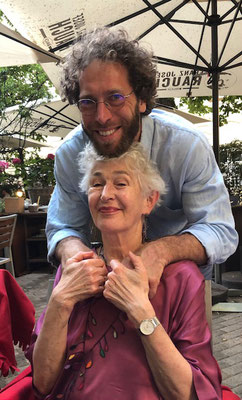
I am grateful to be able to live in a country where – at least not currently – there is no war, in one of the most livable cities in the world. As the daughter of refugees, this is not something I can take for granted. I don't want to end without thanking the many colleagues who have contributed to the development of gender studies and cultural studies, without whom I wouldn't be here. I can't name them all, but I would like to express my particular gratitude to one person who has always supported and motivated me, critically edited all my texts, and, in countless museum visits and conversations, with his special approach to the materiality of art and his exceptional expertise, has inspired me to consider alternative perspectives: my husband, Ivo Hammer.


Brno, November 21, 2022

The New European Bauhaus (NEB): beauty, sustainability and cultural heritage through the prism of Villa Tugendhat
High-level gathering on 21 November 2022 from 14:30-18:00 in Brno, Czech Republic. Tugendhat House
Programme:
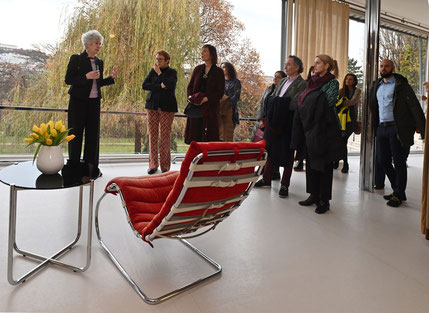
14:30 Arrival and guided tour through Villa Tugendhat (Daniela Hammer-Tugendhat and Ivo Hammer)
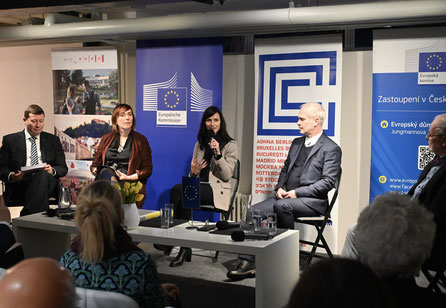
16:00-17:00 High-level panel discussion
Opening remarks by
- Monika Ladmanova, Head of Representation of the European Commission in Czech Republic
- Martin Selmayr, Head of Representation of the European Commission in Austria
Panellists
- Martina Dlabajová, Member of the European Parliament
- Mariya Gabriel, European Commissioner for Innovation, Research, Culture, Education and Youth
- Ivo Hammer, Conservator-Restorer, Art Historian and Professor em. at HAWK University of Applied Sciences and Arts
- Vlastislav Ouroda, Deputy Minister for Culture of the Czech Republic
Moderated by
- Martin Selmayr, Head of Representation of the European Commission in Austria
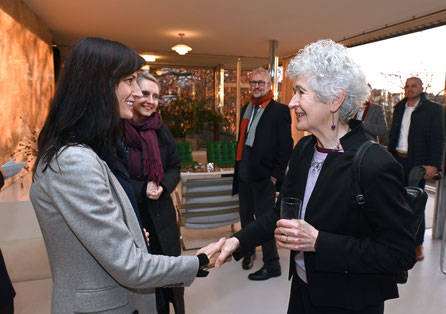
17:00-18:00 Reception
The New European Bauhaus (NEB) is a creative and interdisciplinary initiative of Ursula von der Leyen, President of the European Commission. It connects the European Green Deal to our living spaces and experiences. The initiative calls on all of us to imagine and build together a sustainable and inclusive future that is beautiful for our eyes, minds, and souls.
Architectural purity, interconnection of interior and exterior, timeless technical equipment, noble and exotic materials and, above all, a high level of preservation – these are the main attributes that led Villa Tugendhat to being inscribed on the UNESCO World Heritage List in 2001. Designed by the German architect Ludwig Mies van der Rohe, Villa Tugendhat was built in 1929–1930 as a family home for Grete and Fritz Tugendhat. Its further history is at least as fascinating as its cultural significance, since it has become Brno’s icon of modernist housing and occupies a prominent position globally and within the oeuvre of its architect.
Our gathering “The New European Bauhaus: beauty, sustainability and cultural heritage through the prism of Villa Tugendhat” will, against the backdrop of this emblematic property, explore the goals, philosophy and perspectives of the New European Bauhaus initiative, illustrating and reimagining sustainable living in Europe and beyond. (Martin Selmayr, Head of Representation of the European Commission in Austria)